
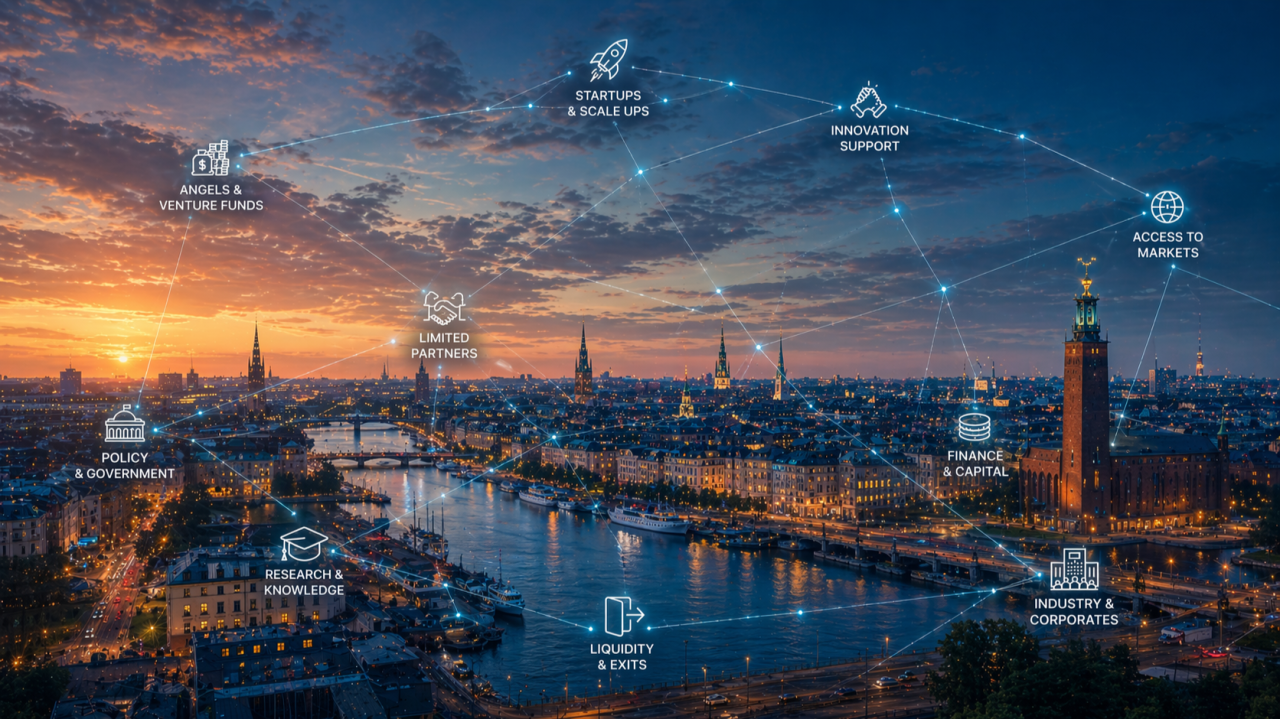

Europe is world-class at research. We produce Nobel laureates, breakthrough science, and patents year after year. Our universities are among the strongest on earth.
But somewhere between the lab bench and the global market, something breaks down.
And when it comes to scaling those innovations into global champions? That is where we truly struggle.
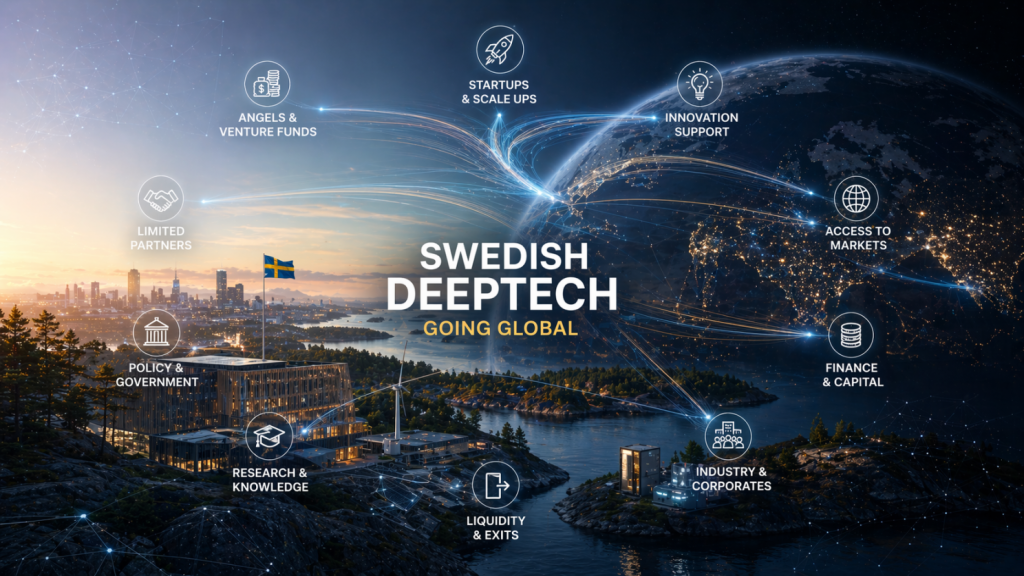
This week I’ve been deeply ingrained in the Swedish ecosystem and the new national cluster program, leading me to reflect on some of these questions, around Sweden’s journey from world class research to equal world class commercial success and, notably, world class success.
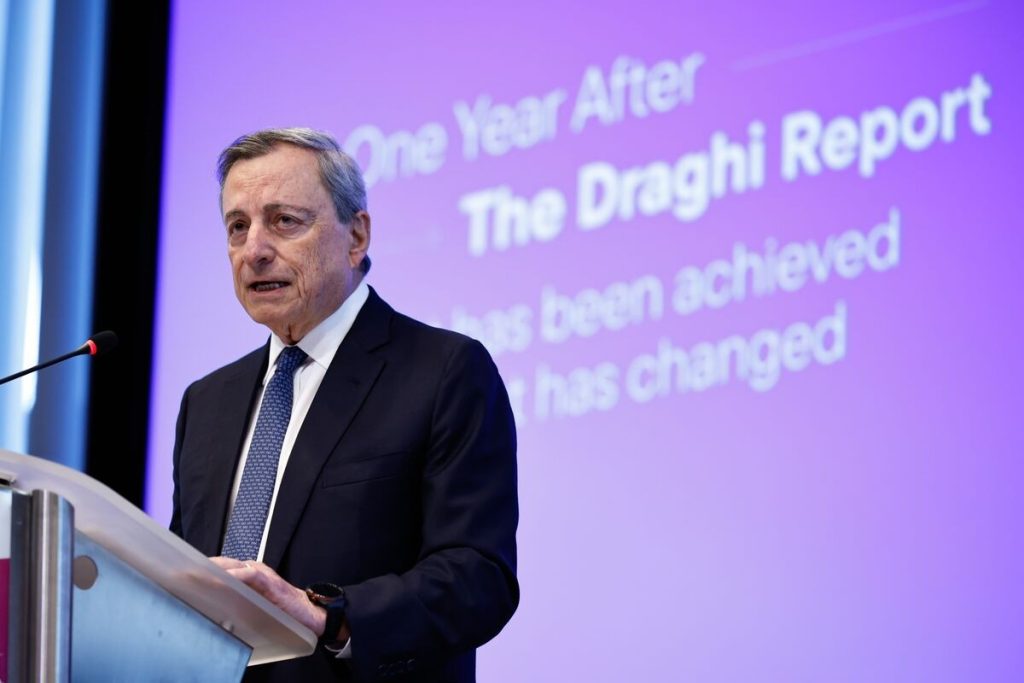
Mario Draghi laid this out plainly in his 2024 report on European competitiveness. The diagnosis is on the table. The question now is what we do about it.
Here is a 10-step plan to shift Europe’s brainpower from research, to market, to scale.
Lab → Market: Commercialise the science
1. Industrialise the research-to-company pipeline. Estonia has set a target of 500 deep tech companies by 2030. Singapore already has 1,300. The gap is not in the science — it is in the infrastructure that converts science into companies. Every research university and science park in Europe needs entrepreneur-in-residence programs, clean IP frameworks, and research accelerators as standard issue.
For Sweden: educate faculty as business angels, not (only) to invest, but to understand that first step of the journey. Train every PhD candidate in commercial development. Run the Scale Up Nordics! program in every university, every innovation park, every science park across Sweden.
2. Unlock the researcher-founder. Most European universities still make spinning out a company harder than writing another grant proposal. Fix the IP terms. Reward the PI who becomes a founder. Build dual-career paths so leaving the lab is a genuine option.
For Sweden: build program ties between startups and researchers. Start educating researchers on GTM, term sheets, cap tables and fundraising from day one. Build networks with researchers, business builders and successfully exited, maybe even serial founders.
3. Fund deep tech early — with the right capital. Generalist seed funds cannot evaluate fusion, quantum, or synthetic biology. Europe needs more specialist deep tech funds — like World Fund, Final Frontier, or Maki.vc — paired with longer fund cycles and patient LPs who understand 10-year horizons.
For Sweden: already a savings- and investment powerhouse in Europe, keep expanding and innovate around finance, venture capital and funds.
4. Treat Europe as one market from Day 1. A French founder should be selling into Sweden, Germany, and Estonia by month six — not by year three. Kill the regulatory fragmentation and the “home country first” mindset. The single market is our unfair advantage. We just need to actually use it.
For Sweden: don’t’ stay at home. Focus on regional- and European markets. Build out GTM programs. Hire non-Swedish account managers and business developers. Bring Swedish innovation to the world, not just Malmö.
Market → Scale: Build global challengers
5. Close the growth-stage capital gap. Pre-seed is solved. Seed is nearly solved. Series B and C is where European companies still get starved — or acquired too early. A company raising $5M in Oslo raises $25M for the same business in San Francisco. That delta kills global champions in the cradle. More regional fund-of-funds. More growth-stage capital. More institutional LPs stepping in.
For Sweden: get in on the New Nordics Fund-of-fund initiative. Work proactively with EIF’s new growth funds. Launch more fund-of-funds, secondaries funds. Train new fund managers.
6. Mobilise pension capital. Europe has trillions of euros parked in pension funds earning modest returns. A single-digit allocation shift into venture and growth would transform the ecosystem overnight. Sweden has shown what is possible. Others need to follow. For Sweden: Already strong here, Sweden can continue to lead the European pension capital movement into alternative capital and notably venture capital. It is a strategic, sovereign muscle we need to continue to develop.
7. Make Europe one talent market. Founder visas. Seamless cross-border employment. Stock option reform across all 27 countries. If we cannot move engineers, founders, and operators as freely as capital does, we will never out-compete the US.
For Sweden: continue to support freedom of movement of tech talent, engineers, researchers, top academics. Make it easier to bring the best people in the world to Stockholm, Gothenburg and Sweden
8. Build scale-up superclusters — not national champions. Stop trying to give every country its own AI hub, quantum hub, and defence hub. Concentrate. Let Munich own industrial AI. Let Tallinn–Helsinki own cyber and deep tech. Let Paris own defence. Let the Nordics own climate. Specialise, then connect.
For Sweden: What started as a national Excellence cluster, might evolve, grow, mature into a Pan-Nordics or even New Nordics Excellence Cluster, naturally ,evolving into a more integrated, economic, knowledge, and cultural collaboration network across the New Nordics.
Scale → Global Champions: Finish the job
9. Fix liquidity and exits. We keep building great companies — then selling them too early, too cheap, to US acquirers. Europe needs more secondaries funds. Stronger public markets (study Nasdaq First North in Stockholm). Partial liquidity at Series A and B. And founders trained from Day 1 to think about value creation and exit pathways — not just the next round.
For Sweden: Again, Sweden is the outlier in Europe. European capital markets come to Sweden to learn. Use that leadership position to build solutions for Europe, not just Sweden. Keep pushing to innovate around finance. Keep developing secondaries funds, new stock market case studies.
10. Build one European narrative — and stick to it. International capital is not interested in “German tech” or “Nordic tech” or “French tech.” It is interested in European tech. One story, told consistently from Slush to VivaTech to Web Summit to Singapore Innovation Days. Acting as one region — not 27 countries competing for the same scarce capital and founders.
For Sweden: deeper integration across EU, NATO will help. Stepping up to take an even more active leadership role isa an opportunity. Finding ways, on the back of Lovable and Spotify, to build the infrastructure, collaboration and ambition. We need, for Europe, to stop talking about Unicorns, and start chasing 100BN – 1Trillion valuation companies. We need to build and scale Europe’s version of Nvidia, Cursor, SpaceX and Anthropic. For that purpose, Sweden has what it takes to lead.
From small scale to world-class leadership: it’s time to step up
Draghi pointed to the challenges. Now it is on all of us —researchers, cluster leaders, founders, investors, ecosystem builders, policymakers, educators and academics— to be part of the solution.
The research is there. The talent is there. The capital is increasingly there.
What has been missing is the will to connect them end-to-end, from lab, to market, to scale – and develop a generation of $100BN, $500BN and $1Trillion outcomes.
I’m excited for what’s ahead, Sweden!