


Scale Up! is a powerful tool for building entrepreneurial skills, supporting founders, angels, investors and ecosystem builders. Globally, 6.000+ have been through Scale Up! But, as a new Scale Up! Facilitator and Partner, how do you actually take Scale Up! to market? In this article, we explore elven proven ways to bring Scale Up! to your market.
By Chris Rangen, Sanjana Rehaja & Stuart Morley
Congratulations, you have gotten trained, certified on Scale Up! Or, maybe you want to support the ecosystem by taking Scale Up! into your part of the world. Maybe you are ready to bring Scale Up Africa Rising! Into the African ecosystem? Or Scale Up MENA! into the MENA ecosystem? or maybe ready to bring Scale Up Europe! into the European ecosystem?
But how, exactly, do you start on taking Scale Up! to market? What are the first steps and what are the best ways?
Before tactics, partnerships, or pilots, there is one uncomfortable truth: Scale Up! does not spread because it is good. It spreads because someone decides to take personal ownership for bringing it into their market.
In every ecosystem where Scale Up! has taken root, there has been at least one individual who stopped waiting for inbound, funding, or perfect conditions—and instead acted with full accountability for the outcome.
This mindset shift matters. Because the early phase of taking Scale Up! to market is not an institutional motion; it is an entrepreneurial one. You are not “rolling out a program.” You are compounding credibility, relationships, and proof—one decision, one session, one conversation at a time.
If you are looking for certainty before you act, you will wait too long. If you are willing to act before certainty, the market starts to respond.
In our experience, working with global partners across 50 countries, these are the nine most common ways to bring Scale Up! to market.
Who attends Scale Up? Nor sure who your target participants are? Check out this article first.
Note, this article discuss how to take Scale Up! into a new market. Once you are in the market, once you have run your first 5-6 paid programs, the dynamics changes a bit.
Scale Up! is now available in Scale Up! (Global), Scale Up Angel!, Scale Up X!, Scale Up MENA!, Scale Up Africa Rising!, Scale Up Europe! and Scale Up Nordics! In this article we use the term ‘Scale Up!’ covering all or any of these.Who buys Scale Up!? Not sure who the buyers are? Check out this article first.
Before we start… What’s your level of Scale Up! expertise?
Running Scale Up! is challenging. It’s technical. It requires you to do cap table math in your head, explain 3x liquidation preference and convert five stacked SAFE notes with different terms, while at the same time you need to teach the Founder’s Journey, explain long-term funding strategies and share personal experiences from scaling a high-growth tech startup.
If you are planning to run Scale Up!, you should have a meaningful amount of experience across the startup ecosystem, as an operator, founder, investor, program manger or startup mentor.
Your expertise should cover two domains; domain knowledge about all things startup growth and facilitation knowledge, to run complex groups. If you don’t have sufficient depth in both domain areas, bring one or more partners to work with you.
Alone -or in groups? Anyone can run Scale Up! by themselves, but that does not mean you should. We have much more fun, we learn more and it usually becomes a better experience for everyone if you have a team with you. Two people work well, three or even four people is absolutely a possibility. You decide.

The eleven Ways to Bring Scale Up! to market
- Existing clients
- Existing relationships
- Domain expert
- The first one is free
- Engaging the ecosystem
- The targeted approach
- The mapping approach
- Find the problem-owner approach
- The hard work approach
- Scale Up! GTM Workflow
- Being active, waiting for random luck
1. Existing clients
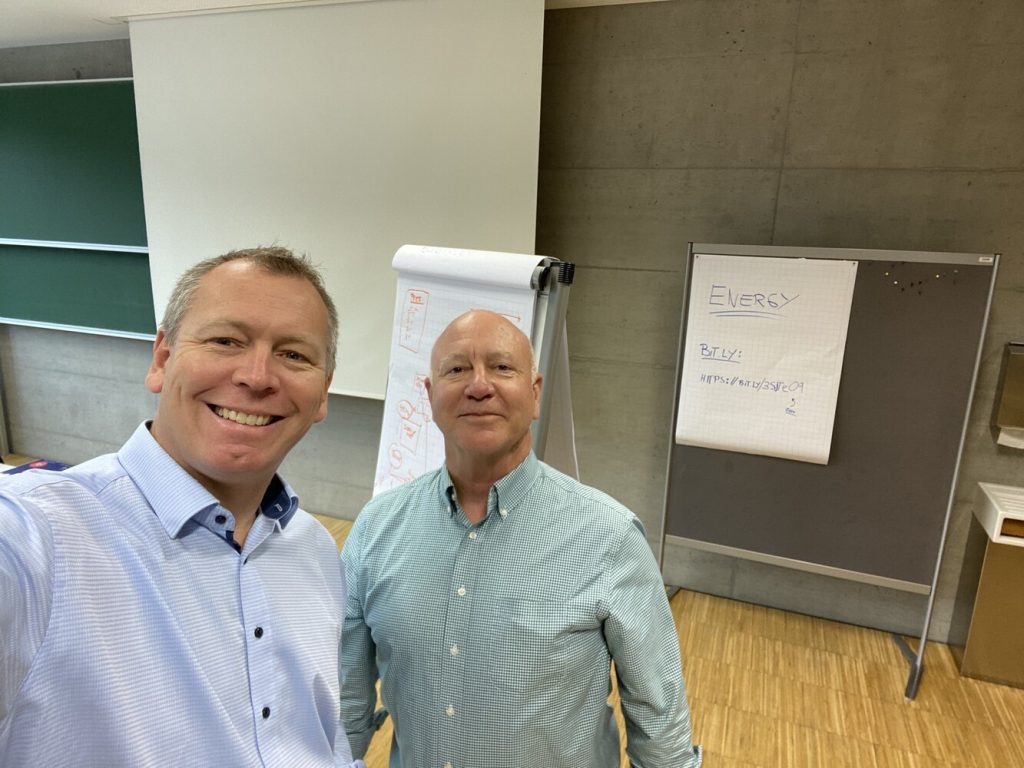
The fastest way to get Scale Up! into the market is simple. Work with already existing clients. They trust you. You have a relationship. You already have ongoing work. All you have to do is plug Scale Up! into a workshop or a program you are already running. There is no sales process, no discussions around budget because you already have a contract or collaboration you are working off of.
When Rick first got his hands on Scale Up! back in 2019, it was pretty easy for him to bring Scale Up! into his classroom in Silicon Valley. He was already teaching. This would fit perfectly into one of his already planned classes.
If you have pre-existing clients, projects, programs or classes, bringing Scale Up! into your market is an obvious quick fix. If that option is available to you, go for it.
2. Existing relationships
With existing relationships you already know your buyer. Maybe you’ve worked together in the past. Maybe she is a for former client. Maybe he just transitioned into a new role in the startup ecosystem. Reaching out to existing relationships will usually lead to a fast uptake of Scale Up! They know you, trust you and are – usually – willing to follow your recommendations.
When Michael first saw Scale Up! in Norway, during the Master Trainer program, he knew exactly who he needed to bring this to. In an instant, he knew the buyers, the pain points and how much they would love seeing Scale Up! in Canada. With strong, pre-existing relationships, Michael could easily and without much delay bring
A useful filter for “existing relationships” is this question: Who already trusts your judgement when you say, “This matters—now”?
In practice, early Scale Up! adoption rarely comes from cold outreach. It comes from people who have already seen you operate under pressure, solve real problems, or lead through ambiguity.
When you frame Scale Up! not as a product, but as the next logical move for their founders, investors, or portfolio, decision-making accelerates. You are not selling; you are guiding.
Trust collapses sales cycles. Credibility compounds adoption.
3. Domain expert
A domain expert is already recognized as an expert in this field. You are possibly business school faculty teaching entrepreneurial finance or startup ventures. Maybe you are the founder of the leading accelerator in your region, or head of investments at a pre-seed VC fund.
In your role, people recognize you as an expert; when you bring Scale Up! into the market, there is only a short path for you to find your buyers and sponsors. It might even happen within your own university or your own startup programs.
First time Mohammed saw Scale Up MENA!, he knew he had to bring it back to his ecosystem in the Middle East. “Can I take this with me?”, was one of his first questions; and he did. As a domain expert, there are usually multiple programs to explore for bringing Scale Up! into the ecosystem.
Being a domain expert is not only about credentials—it is about pattern recognition. Founders, investors, and ecosystem leaders listen to people who can clearly articulate:
- What most startups get wrong
- Why those mistakes repeat
- And what disciplined alternatives actually look like
Scale Up! gives domain experts a structured way to translate lived experience into repeatable learning. When positioned correctly, the program becomes an extension of your professional identity—not an add-on offering.
This is where authority turns into leverage.
4. The first one is free (or, a lot of free pilots)
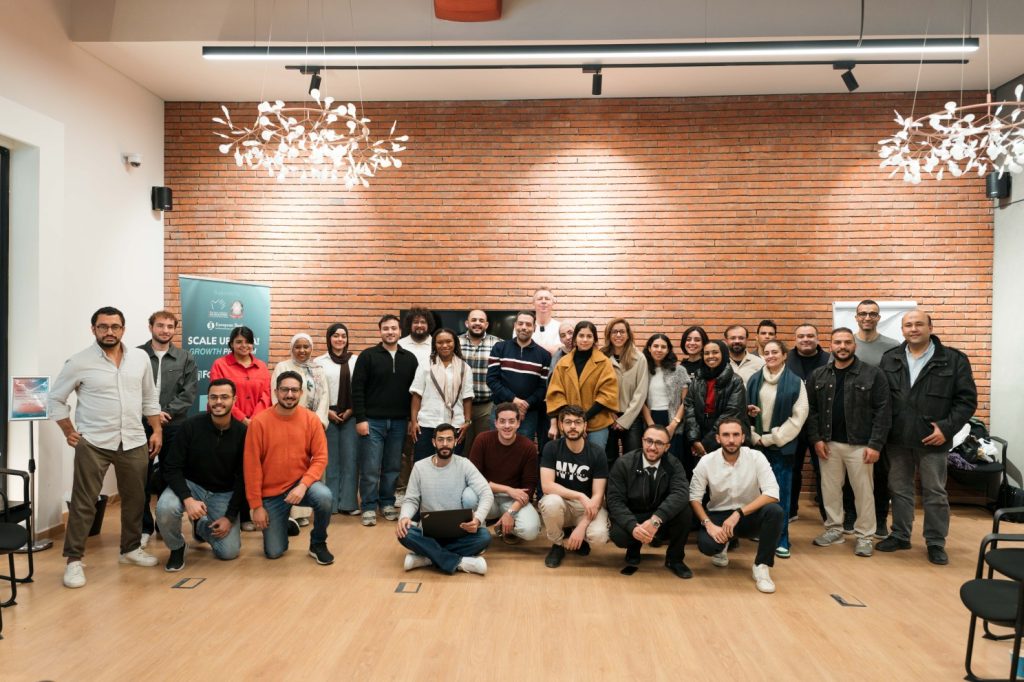
With the first one is free, you bypass the traditional client and buyer profile. Instead, you go directly to the ecosystem. You engage with founders, not gatekeepers. Following ‘the first one is free’, you run a large number of pilot sessions, free to attend, free for everyone. These are unlikely to be full, multi-day Masterclasses, but they are significant enough that startup founders, angels, investors and ecosystem builders get a sufficient taste for Scale Up!; and get a chance to realize the value and benefits of Scale Up! Of course, your skills with Scale Up! need to be decent, or at least rapidly improving.
‘’WOW! Every startup should learn this”, said Costa Rican tech founder Juan Carlos Marti, of Remora XYZ, after attending a free pilot Scale Up! workshop in Oslo, in early 2019.

In total, as we have been rolling out Scale Up!, we have probably delivered 50+ free, unpaid Scale Up! sessions, maybe more. Test sessions, pilots, free Train-the-trainers, discovery sessions; they all serve the same goal, get many more people to try out Scale Up! – and then ask for more, spread the word and help take this into programs and buyer connections.
A dual bonus with ‘the first one is free’ is obviously, you get a lot of practice. From rapid-fire introductions to explaining tricky term sheets for the 12th time; free pilots double as your training ground. Make use of it!
Importantly, going to market with ‘the first one is free’ requires a few more steps to be successful.
“Free” only works when it is intentional.
The purpose of early free pilots is not generosity—it is momentum. Each session is a compounding asset:
- Your facilitation sharpens
- Your language tightens
- Your confidence increases
- Your reputation spreads
The facilitators who succeed treat every pilot as if it will be quoted, referenced, and remembered—because eventually, it will be.
The goal is not volume alone. The goal is belief transfer: when participants leave convinced that Scale Up! is something their ecosystem cannot afford to ignore.
- Capture, capture, capture
Use this to get photos, quotes, comments, feedback. Write blogposts. Write case studies or even mini-cases. Capture quotes. Capture learnings.
2. Ask for referrals, introduction and ‘where should we take this’?
When running free pilot sessions, carve out at least 15. Minutes at the end to ask for ‘where should we take this?’, and ‘is there any program you’d like to see us run this in?’ or ‘is there anyone you know we should talk to’.
3. Follow-up
Immediately after, reach out to the new contacts and referrals. Be disciplined about reaching out to everyone while this thing is still warm. 24 hours, 48 hours tops. Be active, reach out and follow-up.
Going to market with ‘the first one is free’ can be a great way to break into a new market, and you can reach a lot of startup founders early on, helping you build momentum and a following around your work with Scale Up! Expert facilitator Enrico recommends 20 or more sessions in the first year to build your facilitator mastery; that’s easily achieved with this approach.
5. Engaging the ecosystem
Engaging the ecosystem is a tricky way to get to market. Often, it entails many conversations. Many loose meetings. Many coffee conversations. We have seen this approach take up a lot of time, but yielding little results.
With ‘engaging the ecosystem’, you go out and have a large number of conversations. That’s a good thing, but we find that these conversations sometimes lack a plan, a structure and a clear go-to-market workflow. Engaging the ecosystem can lead to great insights from local accelerators, wonderful discussions with key team member at the innovation agency and great conversations with founders. But that all comes to naught if there is no clear distinction between champions, buyers and sponsors.
Many people, first time exploring their local markets for Scale Up! end up, almost accidentally, ‘engaging the ecosystem’, and it kind of stops there. Don’t be that person.
Ecosystems do not move because they are informed. They move because someone takes responsibility for alignment.
“Engaging the ecosystem” fails when conversations remain polite but non-committal. Progress happens when you deliberately classify people into:
- Champions (who advocate)
- Buyers (who decide)
- Sponsors (who fund or legitimize)
If every meeting does not move one of these three closer to action, you are networking—not building a market.
6. The targeted approach
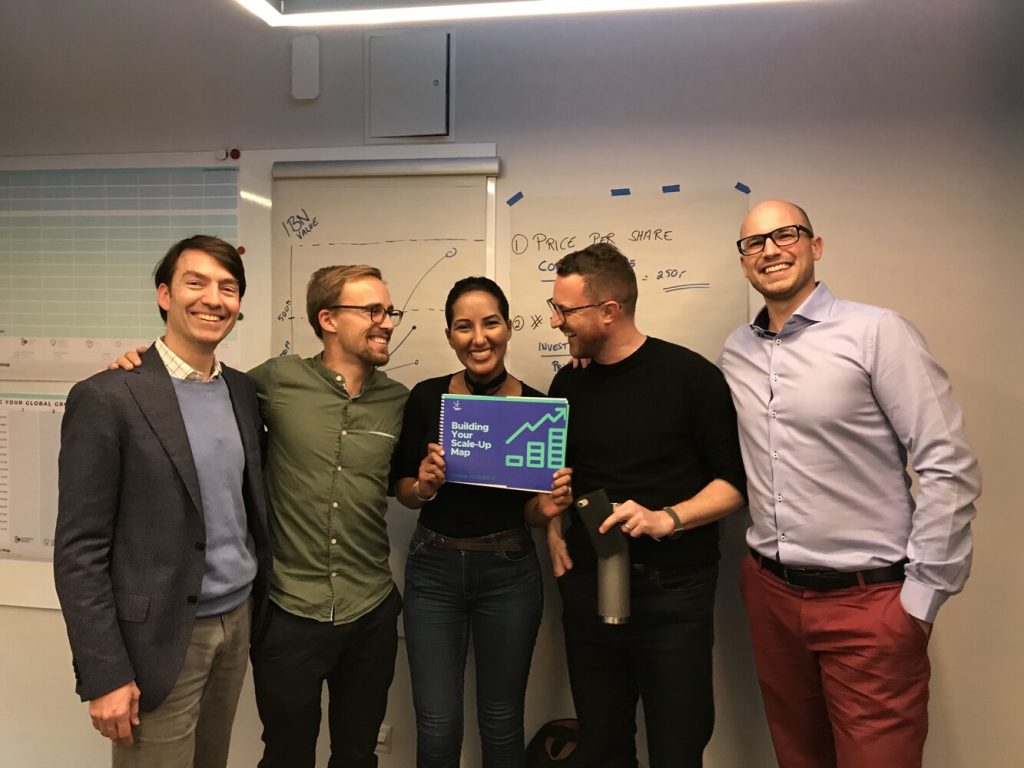
In your ecosystem, find one of the top three ecosystem players, be it an accelerator, incubator, business school, innovation agency or economic development agency.
Reach out to them with a clear understanding of the current challenges and problems they are working on. Position Scale Up! to be a part of their solutions roadmap. Partner closely with one or more of these top three ecosystem players.
Build (Scale Up!) programs that are designed around their strategies, their mission and their key performance metrics. Go to market in close, close partnership with one of these three. Using this approach, you can easily end up working ‘under’ your client, with the program becoming theirs, not yours.
Be aware of this and collaborate constructively on joint communications, case studies and post-program learning.
When Marcus first brought Scale Up! to Japan, he knew exactly which conference he wanted to partner with for the first-ever Scale Up! Masterclass in Japan.

7. The mapping approach
Like the name implies, the mapping approach requires a deep insight and understanding of your local market.
You need to spend time to appreciate the key challenges, the struggles and setbacks local founders experience. You are likely a recognized mentor, startup coach. You have access to founders; you spend time with founders. You know the market and the ecosystem in detail.
With this foundation, you spend time, using any tool, to map out and clearly segment, structure and identify the market. once you have a crystal-clear market map, and only then, do you engage with the top stakeholders.
Always, starting from a position of understanding the challenges and how your Scale Up! programs can solve them.

8. Find the problem-owner approach
Every ecosystem has challenges, problems and gaps between ambition and reality. If you can find, connect and address the owners of these problems, you might find a very short path to a positive outcome.
What are the key problems the ecosystem has?
Who feels them? (often, startup founders, ecosystem builders)
Who owns them, and are responsible to get them solved?
Who lies awake at night, thinking about how to solve these?
Use your toolkit and network. Ask and listen. Do your research. But map out and find the problem-owner. Connect with high-quality content. Be relevant. Be helpful. Be understanding. Be empathic to the problems. Be clear on the solution. You might find this to be a good path to solving real client problems and also bringing Scale Up! to market.
9. The hard work approach
Like the name indicates, our next approach takes …. a …. lot … of work. Here are the steps we have identified.
A. Map the market
B. Define the problem-statement
C. Define the problem-solution
D. Build your domain expertise
E. Learn case studies from the ecosystems (study top companies and investors)
F. Revisit the problem-solution
G. Nail your solution-statement
H. Run three free pilots (small, short)
I. Capture video, photos, quotes and testimonials. Get references and referrals
J. Build your skills
K. Identify GTM partners
L. Identify target participants
M. Test your value proposition
N. Engage with your Champions, Buyers and Sponsors
O. Run three more pilot sessions
P. Capture video, photos, quotes and testimonials. Get references and referrals
Q. Write three case studies and blog posts from your sessions and insights to date Capture different angles, focus on the problem-solution narrative. Focus on outcomes.
R. Identify your Champions, Buyers and Sponsors (three ICP)
S. With the case studies, go back to your buyers, verify the problem-solution-value proposition. Focus on how Scale Up! can help the ecosystem and your buyers
T. Secure 2-3 paid pilots
U. Run pilots
V. Capture video, photos, quotes and testimonials. Get references and referrals
W. Write 2-3 case studies from pilots and evolution so far
X. Write 2-3 content expert pieces. Publish in different channels
Y. Launch a dedicated website, possibly a sub-page, focus 100% on the problem-solution-value proposition. Develop the page with Bolt, Gamma or Lovable, but write it with a Problem-Solution framing
Z. Use your video, photos, quotes and testimonials.
AA. Engage with the next set of Champions, Buyers and Sponsors
BB. Secure next 20 paid programs and Masterclasses
CC. Scale from there
DD. Become a widely recognized domain expert
That’s all. but, seriously, the ‘hard work approach’ is built around a few key steps.
– Start small, pilot and ramp up
– Focus on the problem-solution, every step
– Run pilots, but make sure to capture everything
– Communications, communications and communications
Run many programs, develop, become an absolute expert over time
This approach is not for everyone. It requires a long-term mindset. It requires dedicated. But most of all, it simply requires a lot of hard work.
The hard work approach succeeds for one reason: it rewards consistency over intensity.
No single workshop changes a market. No single partnership creates credibility. No single post generates sustained demand.
What does work is disciplined repetition—showing up, delivering value, capturing proof, and doing it again.
This is not a launch strategy. It is a leadership practice.
10. Scale Up! GTM Workflow
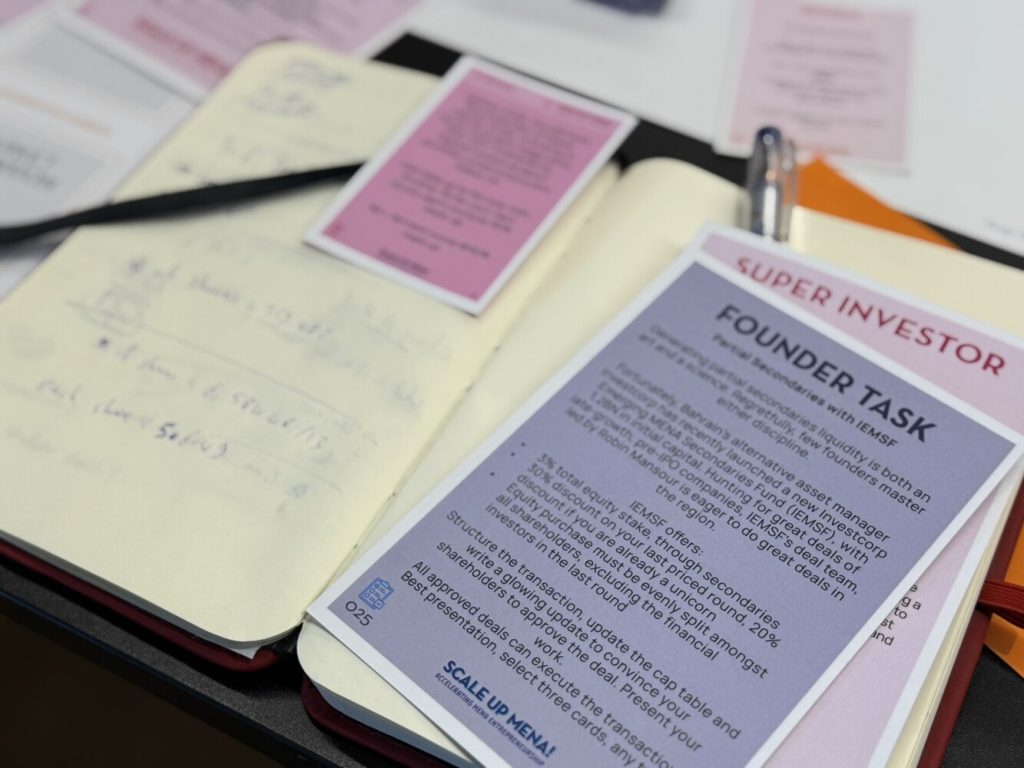
Over the past few months we have been exploring the topic of Scale Up! go-to-market, in-depth. “How can we get more full-sized Scale Up! Masterclasses, in successful collaboration with our global partners?”
We had building blocks, elements, but not the entire go-to-market playbook. So, we developed it. For Strategy Tools Partners and certified Scale Up! expert facilitators, we share the entire, 18-step, GTM workflow.

Not yet partner or expert facilitator? Explore how you can partner with Strategy Tools.
11. Being active, waiting for random luck
Eleventh and last, we wait for luck. If you are already using Scale Up! in one market, you can run it here, across education, accelerators, ecosystem development. You use social media well. Run a great IG account. Write great content on LinkedIn, and suddenly your inbox pings. “Hey, can you come and run….”, from a brand new market. It happens. It’s happened to us more than once. You just need to be active – in some markets – and then wait for luck to strike. It happens.
Time to get started
If this all feels familiar, it should.
Taking Scale Up! to market follows the same logic founders face when going from zero to one:
- There is ambiguity
- There is resistance
- There is no shortcut to credibility
But there is also upside. When done well, you are not just running programs—you are shaping how an ecosystem thinks about growth, capital, and decision-making.
And that impact compounds long after the first cohort ends.
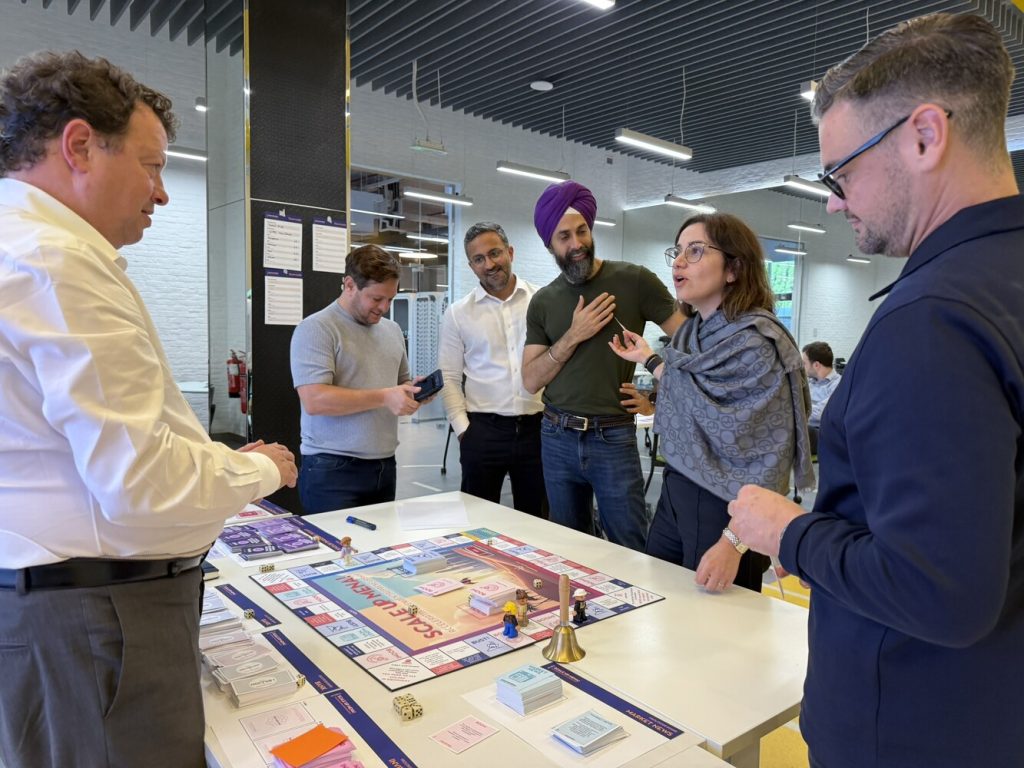
If you are a certified Scale Up! facilitator, you fully understand the early stages of 0-1, of early product-market fit, of nailing your ICPs, your channels, your value proposition. It’s the same here.
You are, in some respect, a founder with a new product in a new market. How you go to market, matters, a lot.
Hopefully, this article has helped shed light on some of your future options, on how you can take the Scale Up! series to market in your region – and hopefully build a sustainable, lasting business, while also driving development of the ecosystem.
After all, that’s why we developed Scale Up! in the first place, to better develop the entrepreneurial ecosystem and help more founders scale.
Want to learn more about the Scale Up! series? Check out ST.io
Interested to join the global partner community? Visit our Partner page.
Curious to bring Scale Up! to your ecosystem? Get in touch today, [email protected]