


You are walking into an investor meeting on Thursday. You have rehearsed the pitch ten times. But have you prepared your questions? The founders who raise well don’t just pitch. They ask. Here’s how to use power questions to balance the power dynamics in your next investor meeting.
The meeting is not an exam
Most founders walk into an investor meeting as if they are sitting an exam. The investor asks, the founder answers. Forty minutes of pitch, a few minutes of grilling, and then, right at the end: “Any questions for us?”
“No, I think we’re good. Thank you so much for your time.”
That is a missed opportunity. And it quietly sends a signal: we need your money more than you need our deal.
Fundraising is a two-way street. You are not only being selected. You are selecting. The investor you bring onto your cap table may sit with you for the next five, ten, fifteen years. On your board. In your next rounds. In the room when you discuss the exit. You need to know who they are, how they work and how they make decisions.
Here’s my thinking. If you want to be treated like a partner, act like one. Ask, don’t pitch.
Where power questions fit in your Funding Journey
In our Funding Journey, stage 4: Process, one of the key deliverables is “Use Power Questions to balance power dynamics”.
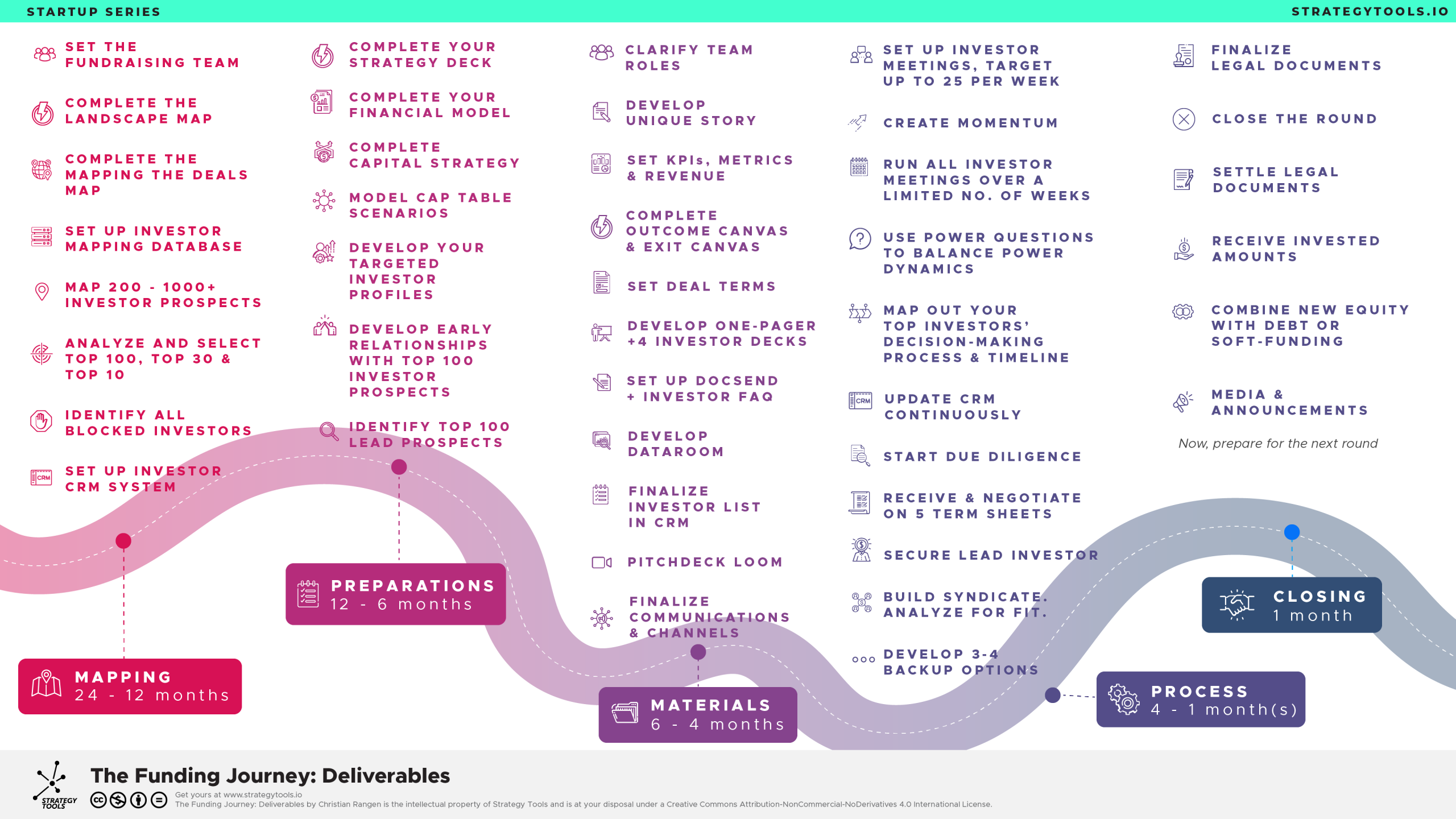
Look at the neighbours on that list. Set up investor meetings, targeting up to 25 per week. Create momentum. Run all investor meetings over a limited number of weeks. Map out your top investors’ decision-making process and timeline. Secure a lead investor.
That is no coincidence. In the Process stage you are running a lot of meetings in a short window. Your questions are how you figure out who is real, who is a fit, who can lead, and how fast they can move. Without them, you are flying blind.
What is a power question?
A power question shifts the conversation from “please judge us” to “let’s find out if we are right for each other”. A good power question does three things:
- It is strategic. It gives you information you need to run your process: fit, ticket size, decision timeline, who leads.
- It is curious, not combative. You are genuinely interested in the answer, and it shows.
- It signals you have done this before. You understand how funds work, and you have options.
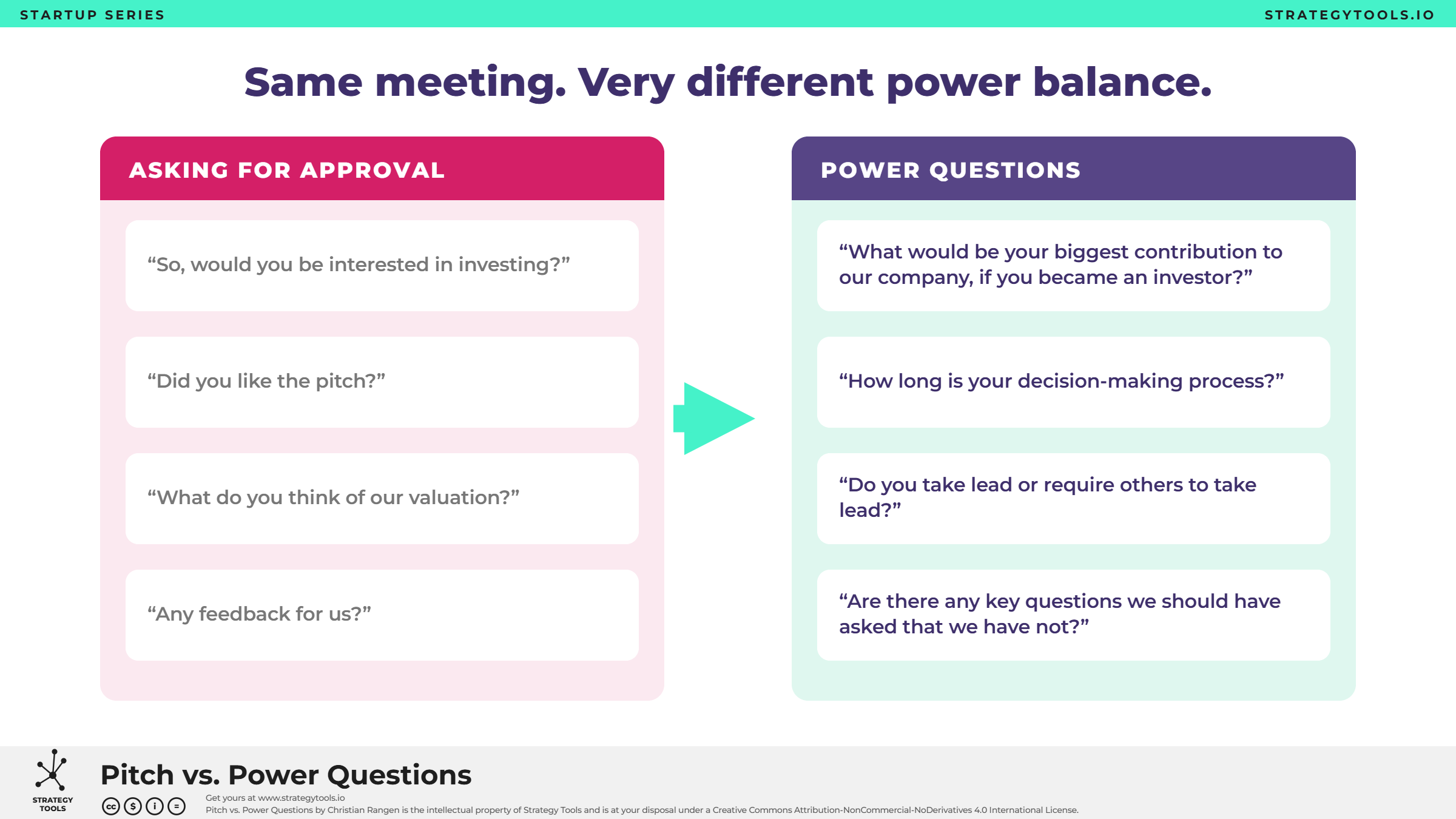
Compare these two:
“So, would you be interested in investing?”
“What would be your biggest contribution to our company, if you became an investor?”
The first one asks for approval. The second one invites the investor to pitch themselves to you. Same meeting, very different power balance.
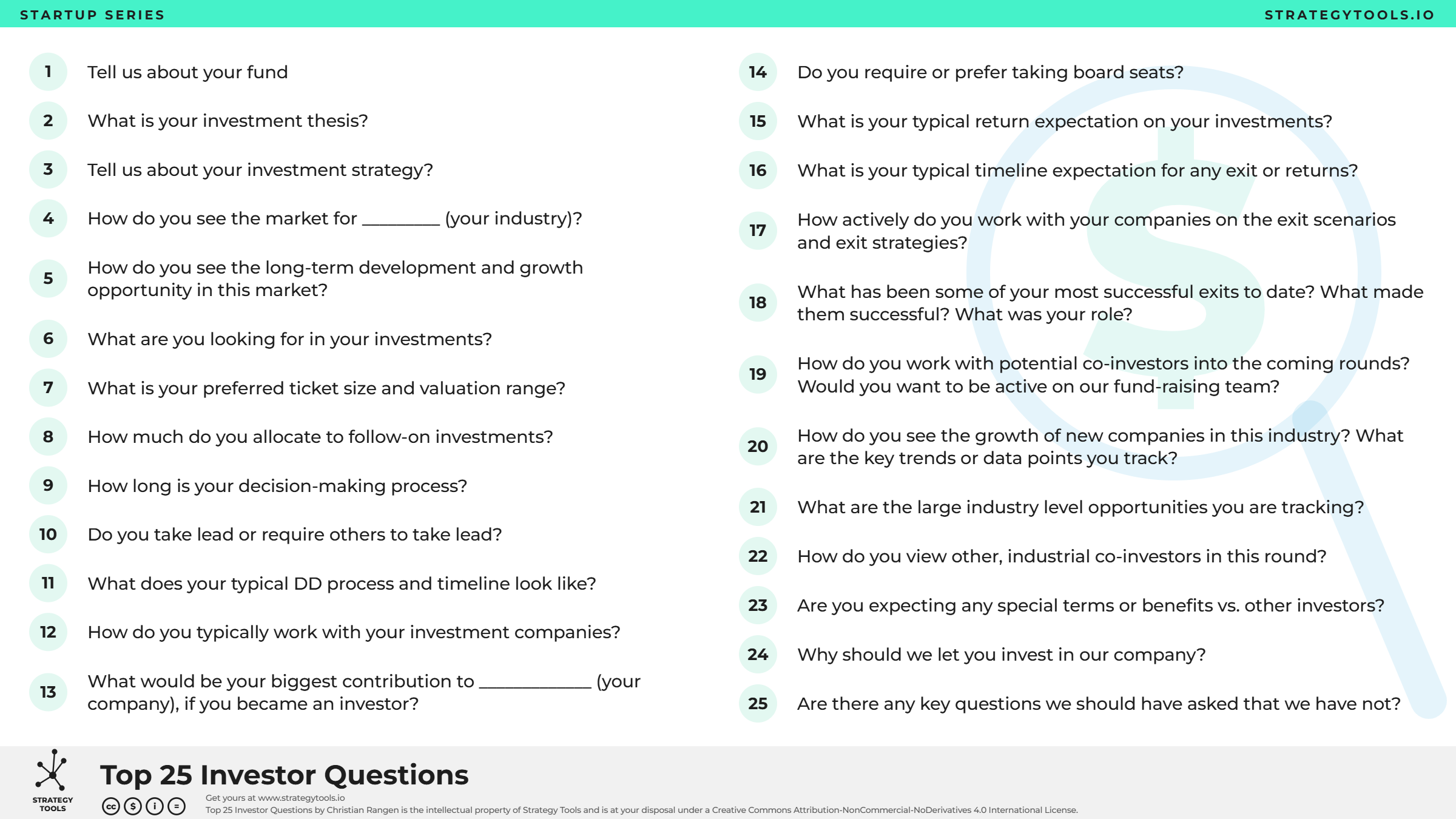
The Top 25 Investor Questions
Over the years we have collected the questions we see work best in investor meetings. Here are our Top 25.
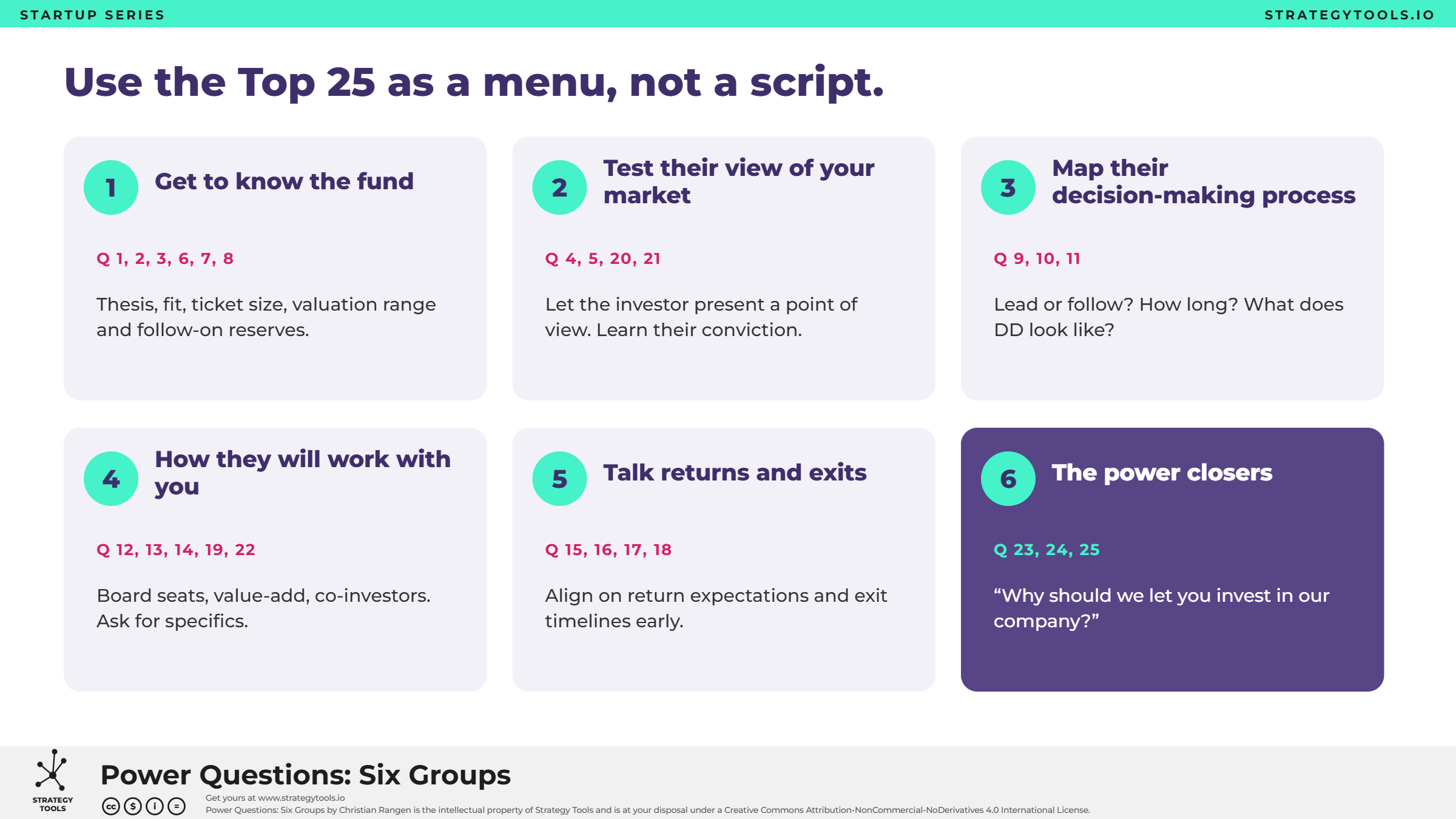
You will not ask all 25 in one meeting. Think of this as a menu. Here is how we group them, and when to use each.
1. Get to know the fund
- 1. Tell us about your fund
- 2. What is your investment thesis?
- 3. Tell us about your investment strategy?
- 6. What are you looking for in your investments?
- 7. What is your preferred ticket size and valuation range?
- 8. How much do you allocate to follow-on investments?
Start broad and let them talk. You learn their thesis, and quickly whether their ticket size and valuation range actually fit your round. Don’t skip question 8. How much they reserve for follow-on tells you whether they will still be there when you raise your next round.
2. Test their view of your market
- 4. How do you see the market for _____ (your industry)?
- 5. How do you see the long-term development and growth opportunity in this market?
- 20. How do you see the growth of new companies in this industry? What are the key trends or data points you track?
- 21. What are the large industry level opportunities you are tracking?
These flip the dynamic. Now the investor is the one presenting a point of view. You learn how much conviction they have in your space, whether they really understand it, and often you pick up a data point or two to sharpen your own narrative.
3. Map their decision-making process
- 9. How long is your decision-making process?
- 10. Do you take lead or require others to take lead?
- 11. What does your typical DD process and timeline look like?
For running your process, these may be the most important questions you ask. Do they lead or follow? How long does a decision take? What does due diligence look like? If they need four months and you plan to close in six weeks, you need to know that now, not in week five. Put every answer straight into your CRM.
4. Understand how they will work with you
- 12. How do you typically work with your investment companies?
- 13. What would be your biggest contribution to _____ (your company), if you became an investor?
- 14. Do you require or prefer taking board seats?
- 19. How do you work with potential co-investors into the coming rounds? Would you want to be active on our fund-raising team?
- 22. How do you view other, industrial co-investors in this round?
Every investor says they add value. Ask for specifics. Board seat or not? How involved are they between board meetings? Will they help you bring in co-investors for this round and the next? A good follow-up: “Could we speak to two or three founders you have backed?” The answer, and how quickly it comes, tells you a lot.
5. Talk returns and exits
- 15. What is your typical return expectation on your investments?
- 16. What is your typical timeline expectation for any exit or returns?
- 17. How actively do you work with your companies on the exit scenarios and exit strategies?
- 18. What has been some of your most successful exits to date? What made them successful? What was your role?
Many founders avoid this part. Don’t. Your investors will be thinking about returns and exits from the first meeting. Asking about their return expectations and exit timeline aligns expectations early, and shows them you are thinking like an owner, not just a builder.
6. The power closers
- 23. Are you expecting any special terms or benefits vs. other investors?
- 24. Why should we let you invest in our company?
- 25. Are there any key questions we should have asked that we have not?
“Why should we let you invest in our company?” is the strongest question on the list. Use it with a smile, and only when you have earned it: real traction, real momentum, other investors at the table. Question 25 is the perfect closer for any meeting. It shows openness, and it often surfaces the concern the investor was holding back.
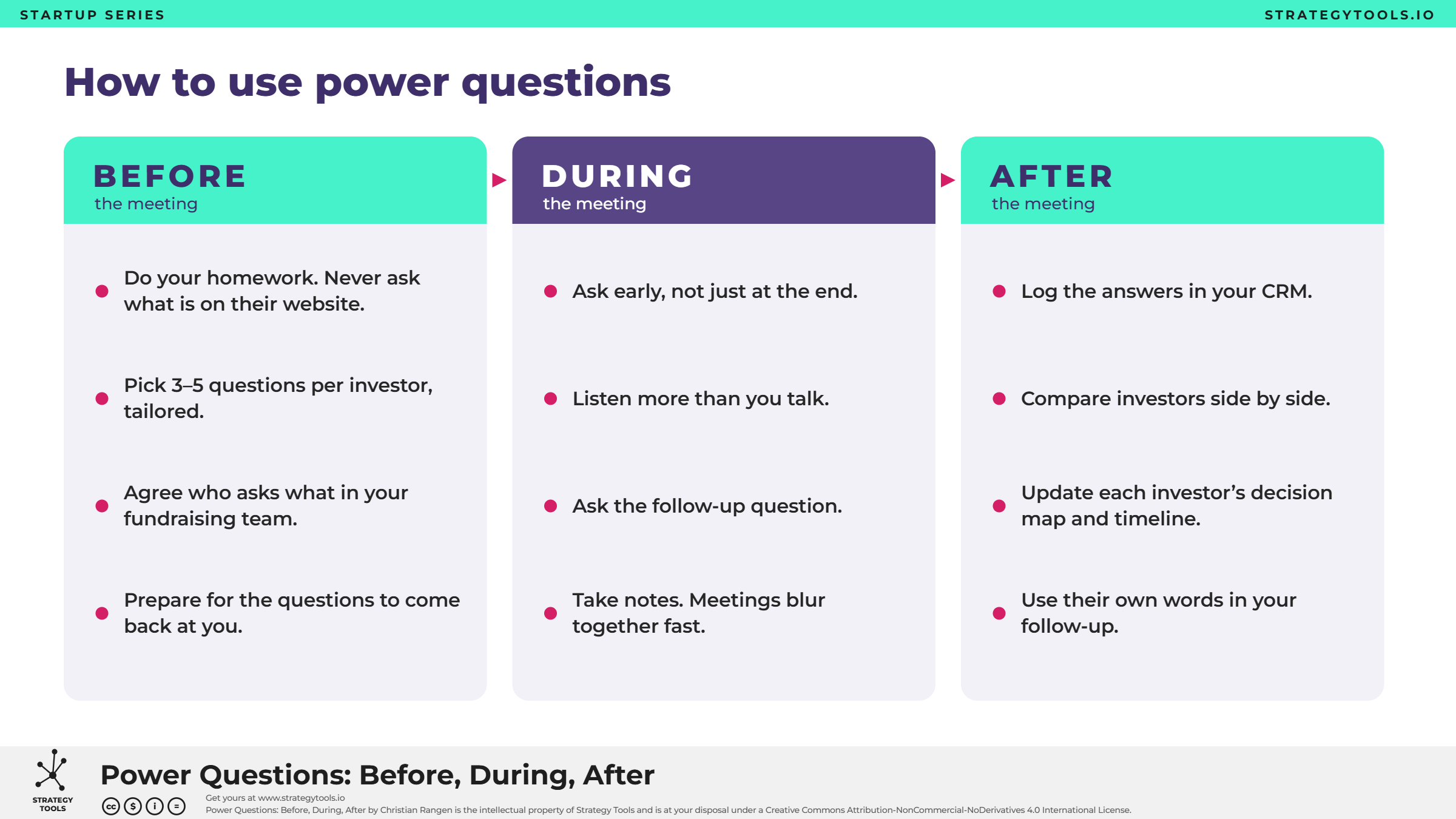
How to use power questions: before, during and after
Before the meeting
- Do your homework. Never ask a question that is answered on the front page of their website.
- Pick three to five questions per investor, tailored to that fund and that partner.
- Agree inside your fundraising team who asks what.
- Prepare for the same questions coming back at you. Good investors will happily answer, and then turn the question around.
During the meeting
- Ask early, not just at the end. Try opening with “Before we dive into the deck, could you tell us a bit about how you see this market?”
- Listen more than you talk. The answers are the point.
- Ask the follow-up question. The second question is usually where the real insight is.
- Take notes. You will be running many meetings, and they blur together fast.
After the meeting
- Log the answers in your CRM: ticket size, lead or follow, decision timeline, key concerns.
- Compare investors side by side. Who is a real lead candidate? Who is a follower? Who is a polite no?
- Update your map of each investor’s decision-making process and timeline.
- Use their own words in your follow-up e-mail. It shows you were listening.
Power, not arrogance
A word of caution. Power questions are about balancing the power dynamics, not flipping them. A founder who interrogates the investor is just as off-putting as one who begs.
Be curious. Be respectful. Be prepared. The goal is a conversation between two parties deciding whether to build something together for the next ten years.
Your turn
Plan out your next three investor meetings and the top three questions you want to bring to the table. (Psst, don’t limit yourself to only three. This is just the start.)
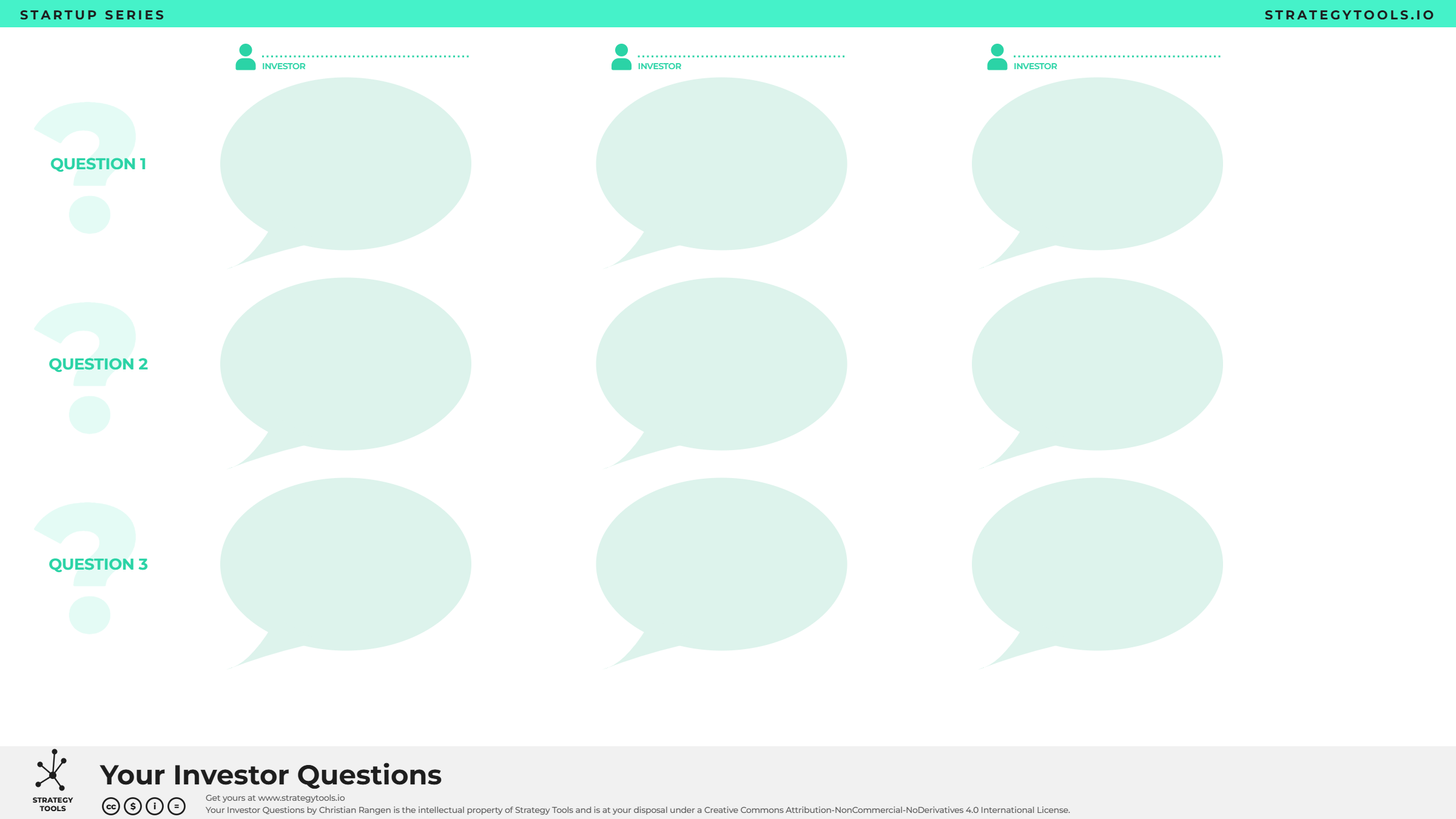
- Write the name of each investor at the top of a column.
- Pick three questions for each, tailored to that investor.
- Make sure at least one question per investor is about their decision-making process.
- After each meeting, write down what you learned, and update your questions for the next one.
You are walking into that investor meeting on Thursday. Bring your questions. Good luck!
Want to read more?
Meeting the investors? Here’s what they’ll ask
Read here.
Founders; Here’s How to Run your fundraising process
Read here.
Founder? These are the six decks you need
Read here.
Startup Founder? How to build your data room
Read here.
How Is Your Data Room Holding Up?
Read here.